29 July 2026

AI in SAP –
how we work today and where we are heading

AI is changing how we deliver software – and what it means for our collaboration

Today’s agenda

Goal

To show how far mib:con has progressed in its AI transformation

01

AI is a standard part of our delivery

Not full automation, but a tool that improves efficiency, accuracy and competitiveness. We use it daily, not as an experiment

02

We take security and governance seriously

Enterprise standards, Zero Data Retention and separated environments. We deploy AI in a way that is legally compliant and secure

03

We want to show you real results

Live demos of SAP development, the SAP GUI assistant, gap analysis and data analysis, and the measurable impact AI delivers in practice

04

Opening the way to further collaboration

Legacy application transformation, SAP S/4HANA and other areas where we can use AI together

0101
Chapter 01

AI is now integral to project delivery

AI at mib:con

From the first days of ChatGPT to AI as a standard part of development

Late 2022

ChatGPT arrives

Within days we start using it in development and documentation. We quickly see both the benefit and the need to standardise.

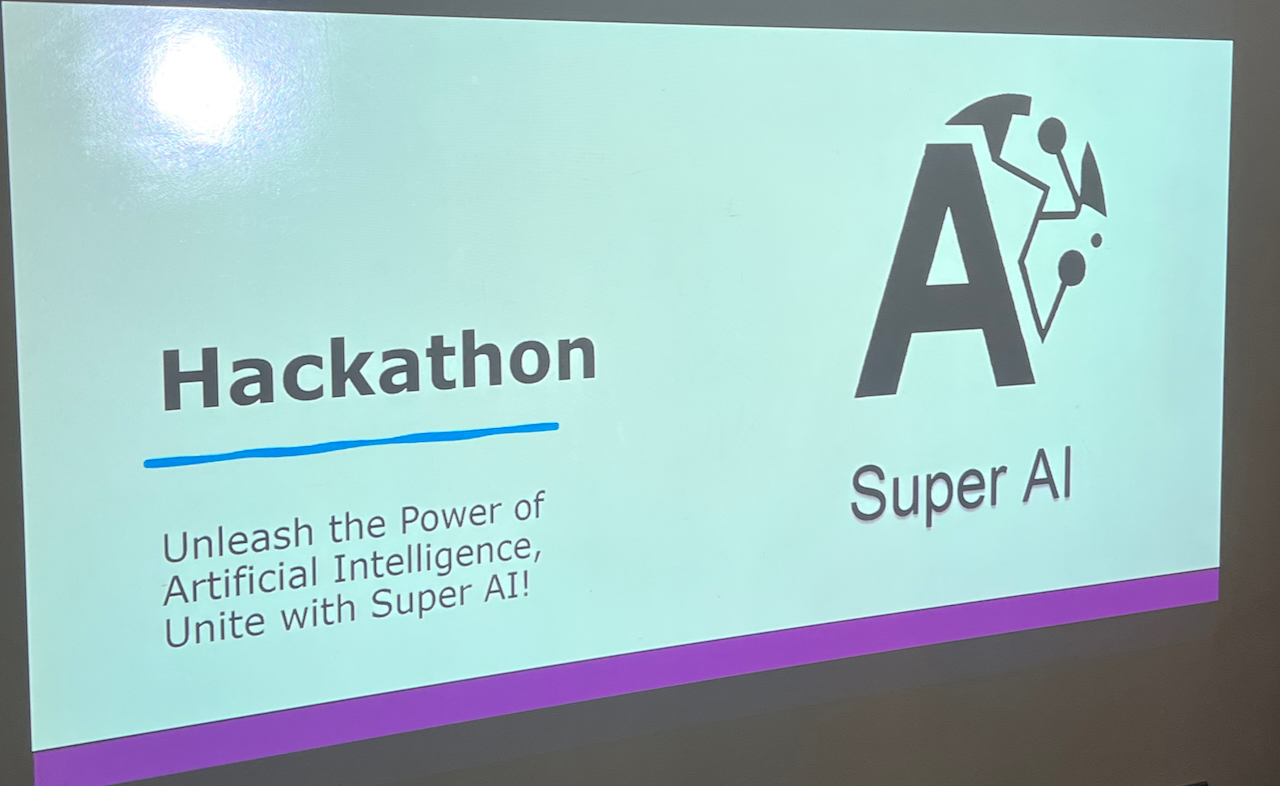
The first mib:con AI hackathon, June 2023
17 June 2023

1st AI Hackathon

First internal AI hackathon — sharing use cases, joint experiments, an AI community forms.

2023 / 2024

Business Support AI

A dedicated team and a Head of AI role are created (Milan Procházka). Security, governance, enterprise standards.

2025

MaiK + Claude Code

Our own AI platform with Zero Data Retention. Multi-model approach. Rollout across teams, internal AI marketplace.

2025 — Q1 2026

AI in SAP development

SAP MCP server PoC, customising via AI, GUI scripting. Deployed on real projects.

2026+

AI-driven development

AI as an everyday work tool. Measuring the benefit (DORA + AI metrics). A flow for AI-driven development and growth.

Three years of systematic work with AI — from first experiments to an enterprise standard.

AI works for our clients and for us

AI is part of the work.

Client Delivery

Analysis & Documentation

  • Writing BRQ, FRQ, NFRQ, fit-gap analyses and process diagrams
  • Functional and technical documentation, change requests, test scenarios, go-live checklists

Communication & Support

  • Meeting minutes, user guides and training materials
  • RFPs, proposals, client presentations, translations and L1/L2 support answers

Technical Development

  • Java and ABAP development with or without MCP, code review, debugging
  • Data migrations, authorisation concepts and automated unit tests
Platforms & Governance

Internal AI Stack

  • Anthropic ecosystem first: Everybody Claude, Cowork, Claude Code with O365 connector
  • Codex and Cursor alongside, in a multi-vendor model with no lock-in
  • MaiK, plugins, hooks, agentic workflows; Confluence, Redmine and GitLab connected via MCP

AI Ambassadors

  • Internal ambassadors in every division spread AI know-how

Security & Governance

  • Enterprise security, Zero Data Retention, approved AI marketplace
  • Projects follow the client's scope; sensitive data is handled in an isolated environment or with human-in-the-loop

How we manage AI at mib:con

We systematically map, standardise, measure and train. AI is not an option; it is a necessity.

01

We map

AI activity map
  • A template for every consultant
  • 22+ activity types (development, BRQ/FRQ, documentation, tests, …)
  • Frequency, AI potential, tool, % saving
  • Consolidated across the company
02

We standardise

Procedures + AI agents
  • A dedicated procedure for each covered area
  • AI agents: BPMN → BRQ/FRQ, agent implemented
  • MaiK marketplace = single source of truth
  • Multi-vendor stack, no lock-in
03

We measure

MibProject + DORA
  • Consultants give 2 estimates: with AI / without AI
  • Delta = real benefit, not a guess
  • Tech. documentation: a proven 80% minimum
  • DORA + AI metrics (tokens, review time)
04

We train

Consultant AI Protocol
  • Consultant card: skills and when they were verified
  • Quarterly review of AI outputs (sample)
  • Annual update for new tools
  • Escalation when AI is not used
A consultancy lives on efficiency. That is why we manage AI as a standard, not as an experiment.
0202
Chapter 02

Security and governance as core principles

Enterprise Security & Zero Data Retention

Data stays with us. The AI forgets it after answering

No consumer AI in the company

  • Enterprise contracts with all hyperscalers (Azure OpenAI, AWS Bedrock, GCP Vertex)
  • No training or fine-tuning on our data — guaranteed by contract
  • ChatGPT Plus, Claude Pro and similar plans run under different terms and have no place in the company

AI is an access layer, not new privileges

  • AI sees only what the user is entitled to — no privilege escalation
  • We actively monitor supply-chain threats in the ecosystem (the Shai-Hulud npm/PyPI worm, CVEs in AI tools) and respond to them
Queryfrom a user or an application
LiteLLM proxyrouting and cache · runs on our side
Enterprise AIAzure / AWS / GCP · contractual ZDR
Data deletedno training · no logs

Governance

Employees get better AI inside the company than outside it.

Without governance, shadow AI emerges

  • People will use AI — the question is whether under oversight or outside it
  • Shadow AI = unauditable, unmeasurable, legally risky

Three layers of accountability

1
Strategic(Chief AI Officer + AI Core team)

where the company is heading, what we deploy

2
Operational(Security, Legal, Architecture)

approval process and security review

3
Practical(teams, individuals)

internal tool marketplace, training, feedback

Use cases classified by risk

Low riskHigh risk
Fully allowed

code, documentation, tests

Human in the decision

sensitive reviews, contracts, customer communication

Isolated environment only
Prohibited

regulated personal data, secrets, financial decisions

AI-Driven Development

How we build software with AI internally. At clients, only within the agreed scope.

Our stack

  • Claude Code, Codex, Cursor — multi-vendor, no lock-in
  • Robust ecosystem: skills, plugins, hooks, agentic workflows

Security framework

  • Claude Code via a Teams licence
  • Zero Data Retention mode via API-based consumption when needed
  • Internal AI marketplace — approved tools, no shadow AI

On client projects

  • Always within the agreed scope and the client's policies
  • Sensitive data or code: isolated environment or human-in-the-loop
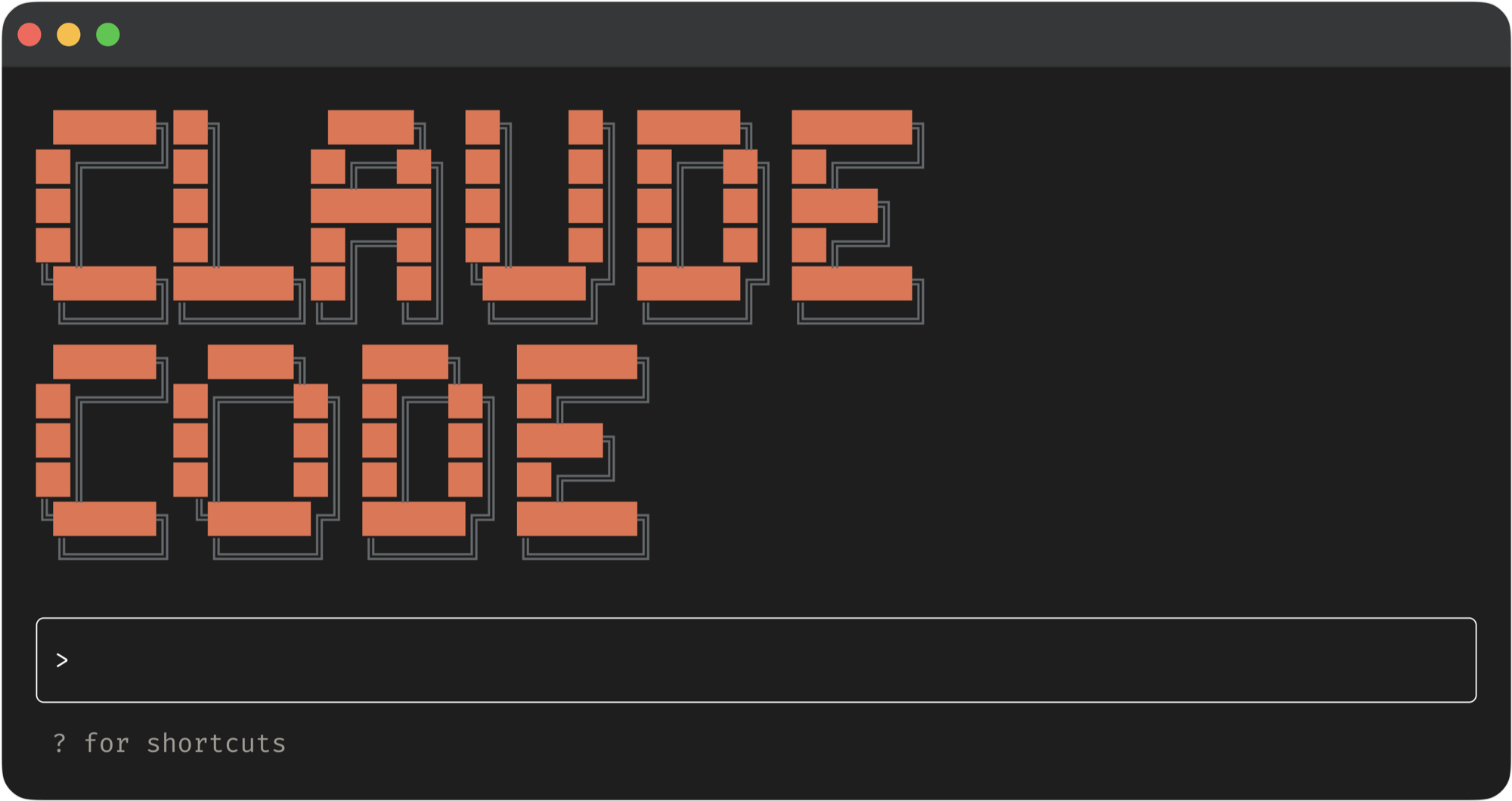
Claude Code in the terminal
Claude Code
Codex
Cursor
skillspluginshooksagentic workflows

DORA & measuring efficiency

AI is an amplifier — it magnifies whatever you have already built.

We measure to see the difference

  • DORA: AI increases code volume, but code is a liability, not an asset
  • Without a baseline we cannot tell whether AI helps or adds technical debt

Classic DORA + AI-specific metrics

  • Lead time, deployment frequency, change failure rate, MTTR
  • Token costs, time spent reviewing AI output — via OpenTelemetry

Hybrid human + AI teams

  • What to leave to AI and where a human must step in — measurement is the feedback
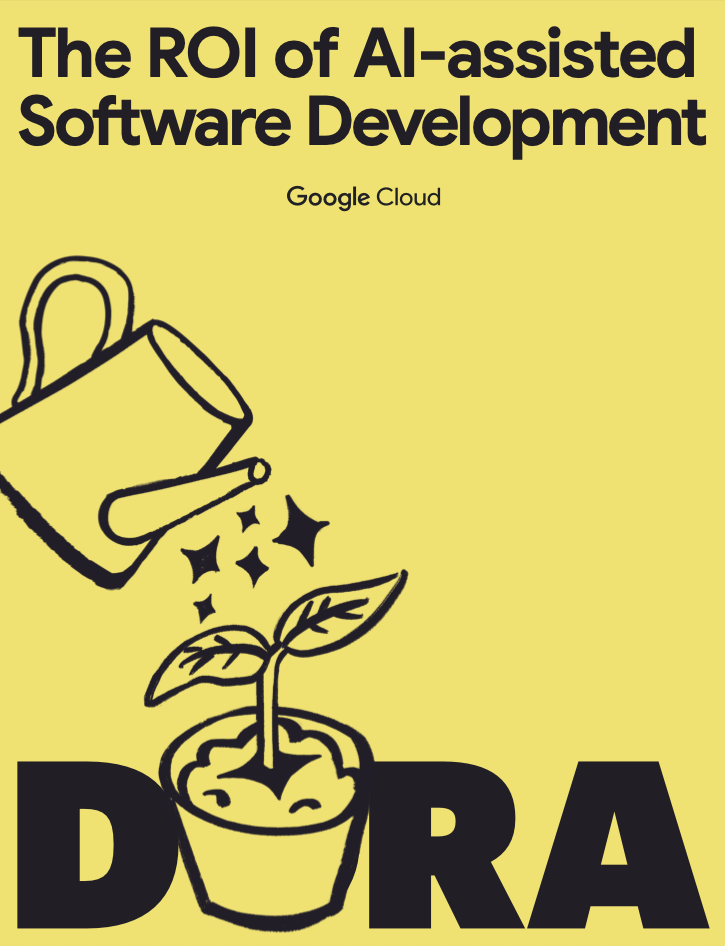
DORA – The ROI of AI-assisted Software Development (Google Cloud)
Lead timeDORA
Deployment frequencyDORA
Change failure rateDORA
MTTRDORA
Token costsAI · OpenTelemetry
Time reviewing AI outputAI · OpenTelemetry

MaiK – our AI platform

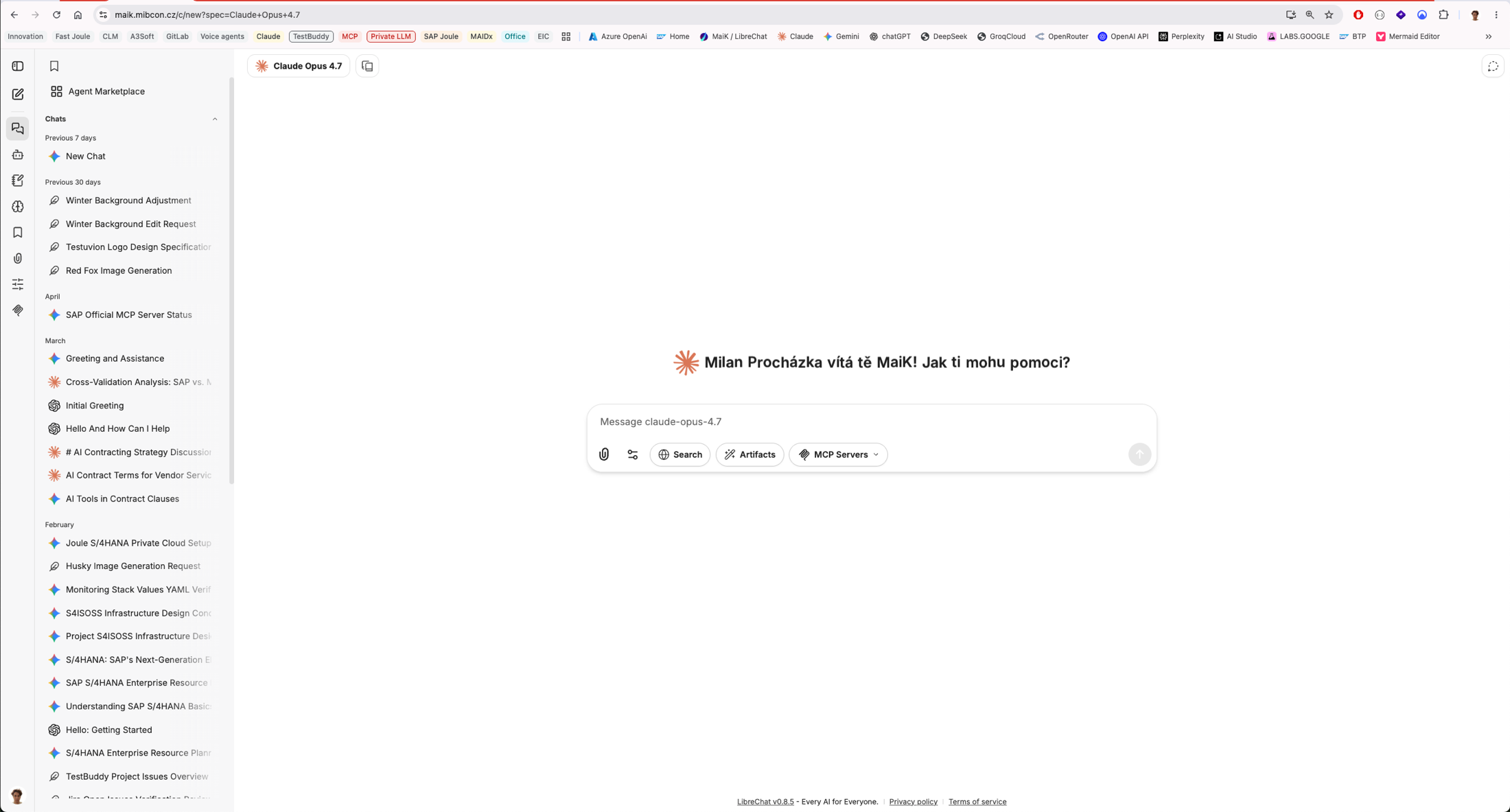
One internal AI chat for every model and our internal systems

  • Enterprise security — Zero Data Retention for all models
  • Multi-model: GPT-6.1 (Azure), Claude Sonnet 5.5 (AWS), Gemini 3.8 Flash (GCP)
  • LibreChat + LiteLLM proxy, a vendor-agnostic abstraction layer
  • Working with documents, multimodal input (images, drawings)
  • Connected to internal Confluence, Redmine and GitLab via MCP
  • Agent support for automating routine tasks
GPT-6.1Azure Claude Sonnet 5.5AWS Gemini 3.8 FlashGCP
MaiK – internal AI chat
ConfluenceMCP RedmineMCP GitLabMCP

Where our AI ecosystem is heading

We consolidate on Anthropic: more powerful tools, less control over retention

TodayMaiK
  • Internal applicationLibreChat with a LiteLLM proxy
  • Model-agnosticGPT, Claude, Gemini in one interface
  • Connected via MCPConfluence, Redmine, GitLab
  • Documents and agentsMultimodal input, routine-task agents
  • Data controlEU data residency, we control retention
DirectionAnthropic ecosystem
  • Claude CodeDevelopment with skills, plugins and hooks
  • CoworkAgentic work on files and documents beyond developers
  • Office 365 connectorsClaude on the Microsoft 365 data people already use
  • And furtherMCP connectors to internal systems, custom skills
  • Data controlClaude for Work; some tools' retention is not in our hands

More of our AI use cases

Voice, agents, knowledge and visual AI: what else we build

Voice agents

Speech-to-speech with 250–500 ms latency; the model also hears tone and emotion. L1 support, B2B voice ordering.

Machine learning and STT (Vosk)

Not only generative AI: we set up the infrastructure for training ML audio models. Vosk STT powers our voice agents.

Jarvis, project assistant

Knows the project and operates the application for the user, including voice-controlled mobile apps. Internal project.

Agentic systems

Agents that plan multi-step work and use tools and systems to finish it. Examples on the following slides.

RAG and document search

Answers from the knowledge base: L1/L2 support assistant proven on FiskalPRO, semantic search across company documents.

AI photobooth at Designeo

Deepfake-based photobooth that puts visitors into themed scenes and environments.

0303
Chapter 03

How do we apply AI in SAP development?

Demonstration of real use cases

3.1BPMN 3.2AI-assisted data analysis for FI-CA migration 3.3Live demonstration of SAP development 3.4AI copilot for SAP consultants
3.13.1
AI in practice

BPMN

AI turns workshops into BPMN models

Process analysis: how we accelerated a client’s target concept

Consultant
AI (MaiK)
Consultant
Client
Record
Transcribe
Structure
Model
Refine
Approve

1The recorded workshop lets the consultant focus on the business, not on notes

2AI produces a detailed transcript of every requirement and decision

3Our internal AI tools turn the transcript into process steps

4A draft BPMN model is generated automatically

5The consultant checks the model and develops it further

6The client reviews and approves the target concept

Outcome

We saved substantial time and budget on the target concept, on a schedule that looked impossible without AI.

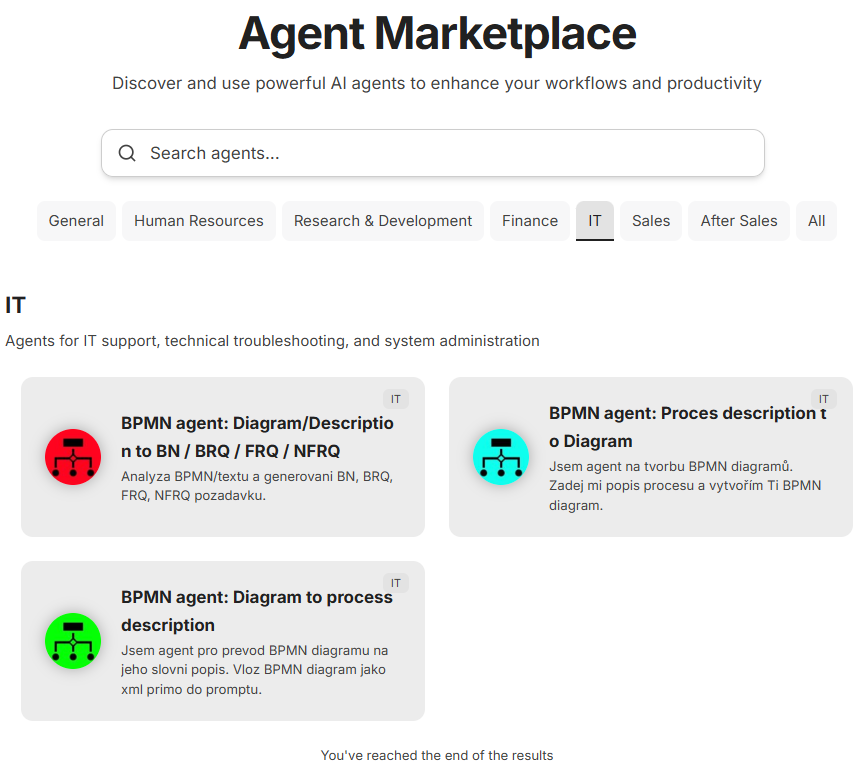
Building agents in MaiK

Agents that turn a BPMN diagram into a process description including BRQ, FRQ, NFRQ

Agents that create a BPMN diagram from a text description of a process

MaiK Agent Marketplace with BPMN agents

The approach that worked

… and why this one

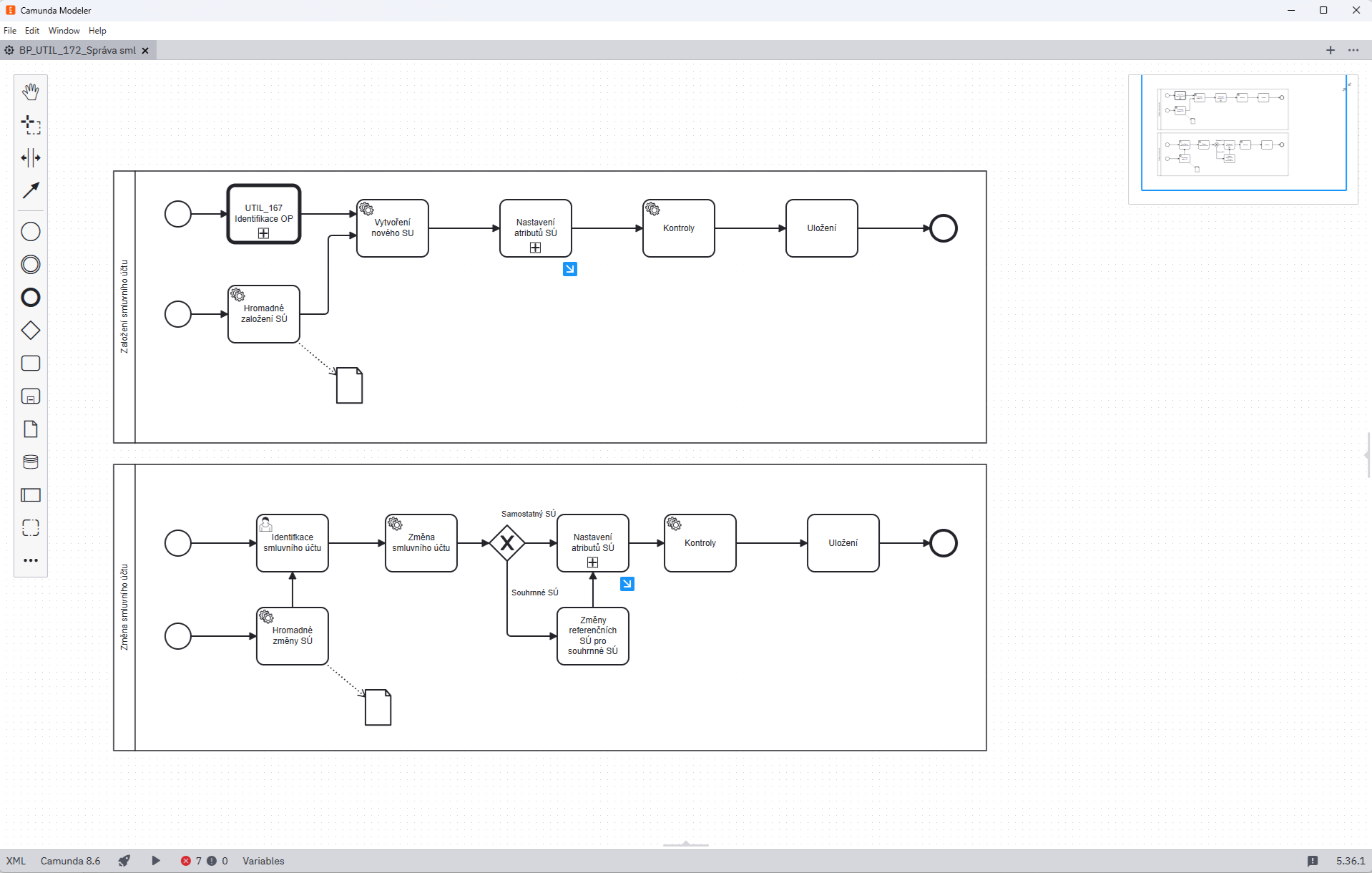
In a meeting, the consultant works with business users and methodologists to produce the best possible process design as a BPMN diagram:

Transcript of the meeting recording

Other materials for the process

The consultant can then review the process again and, if needed, adjust it into its TO-BE form

BPMN diagram in Camunda Modeler
BPMN diagram TO-BE
3.23.2
AI in practice

AI-assisted data analysis for FI-CA migration

42 M documents analysed in one day

Data analysis for the ČEZ migration to SAP S/4HANA Utilities

What AI analysed in the source system
41.8M

real billing documents, plus 38.4 M simulations

1.45M

reversals (corrected documents), 3.5% of real documents

7.5M

contracts, of which 3.3 M are active

Effort for the same analysis
Manual
2 people, several weeks
With AI
1 day

Read-only queries on a copy of production; every figure measured, nothing estimated unless marked. Bars are illustrative.

Source: mib:con analysis of ČEZ source system RTT_130 (ECC 6.0 IS-U), 10 Sep 2026

96% of reversals made this or last year

Corrections are routine, but almost all of them concern recent periods

Reversals executed in 2025, by year of the corrected billing period
2017–2020
20
2021
83
2022
627
2023
2,380
2024
25,727
2025(current year)
51,619
96.1%
96.1%

of 2025 reversals correct the current or previous year

99.1%

are covered by a history depth of two years

103

reversals out of 80,456 concern periods older than three years

Source: mib:con analysis of ČEZ source system RTT_130, field ERCH.STORNODAT, 80,456 reversals in 2025, measured 10 Sep 2026

Same 99.9% coverage at 4% of the data

A migration recommendation for billing history, based on measured facts

#1

Active items only

≈ 25 GBData volume
60–90 MDBilling effort
0%Corrections covered

No billing history in S/4HANA; corrections stay in the old system

Recommended
#2

Minimum history + 2025

≈ 470 GBData volume
150–220 MDBilling effort
99.9%Corrections covered

Last bill per contract, 3 years of consumption, all documents from 2025

#3

Full correction depth

≈ 1,870 GBData volume
600–900 MDBilling effort
99.9%Corrections covered

Old tariff model must be rebuilt 1:1 in S/4HANA

Prerequisite for #2: an approved process for corrective documents without reversing the original. Effort figures are expert estimates.

Source: mib:con migration scenario analysis for ČEZ, 10 Sep 2026; volume = EMIGALL transfer files

3.33.3
AI in practice

Live demonstration of SAP development

From client email to SAP change, live

Live demo · SAP development with AI working directly in the system

The request: a client email
From:Client business team
Subject:Report extension

Hello,

Could you please add a column with the status description to our SAP report? Today users only see the status code and have to look up its meaning.

Thank you

1
Read the request

AI interprets the email and identifies the report and the change needed

AI
2
Analyse in SAP

Through our AI connector, AI reads the report code and data model in the system

AI
3
Implement the change

AI adds the status description column in ABAP, live in SAP

AI
4
Review and release

The developer checks, tests and releases the change

People

AI steps 1–3 People step 4: nothing goes live without review

3.43.4
AI in practice

AI copilot for SAP consultants

AI assistant takes over SAP GUI routine

Our internal AI assistant implements an SAP Note in SAP GUI

Consultant:

“Implement this SAP Note in the sandbox and tell me what changed.”

01

Reads the SAP Note

Checks prerequisites and the objects affected in the system

Works in SAP GUI

Controls the consultant’s computer: opens transactions, fills in screens, clicks through steps

03

Reports back

Summarises what changed for the consultant to check and approve

Why it matters: repetitive, manual SAP GUI work runs on its own, and the consultant spends the time on decisions instead of clicks.

Days instead of dozens of MD

A client sandbox ready for S/4HANA conversion and RAM sizing

What the client needed
Align the sandbox
Run the S/4HANA conversion
Measure the RAM needed
Effort to align the sandbox
Manual
Several dozen MD
With AI
A few days

Outcome: the conversion could run, and the client sized RAM for SAP S/4HANA on measured data instead of an estimate.

Bars are illustrative.

Spacenext